
The Cancer Test Too Many Patients Still Aren't Getting — And Why It Matters
Cancer treatment has historically been guided by where a tumor appears in the body. But that approach can miss what matters most: what is actually driving cancer growth.
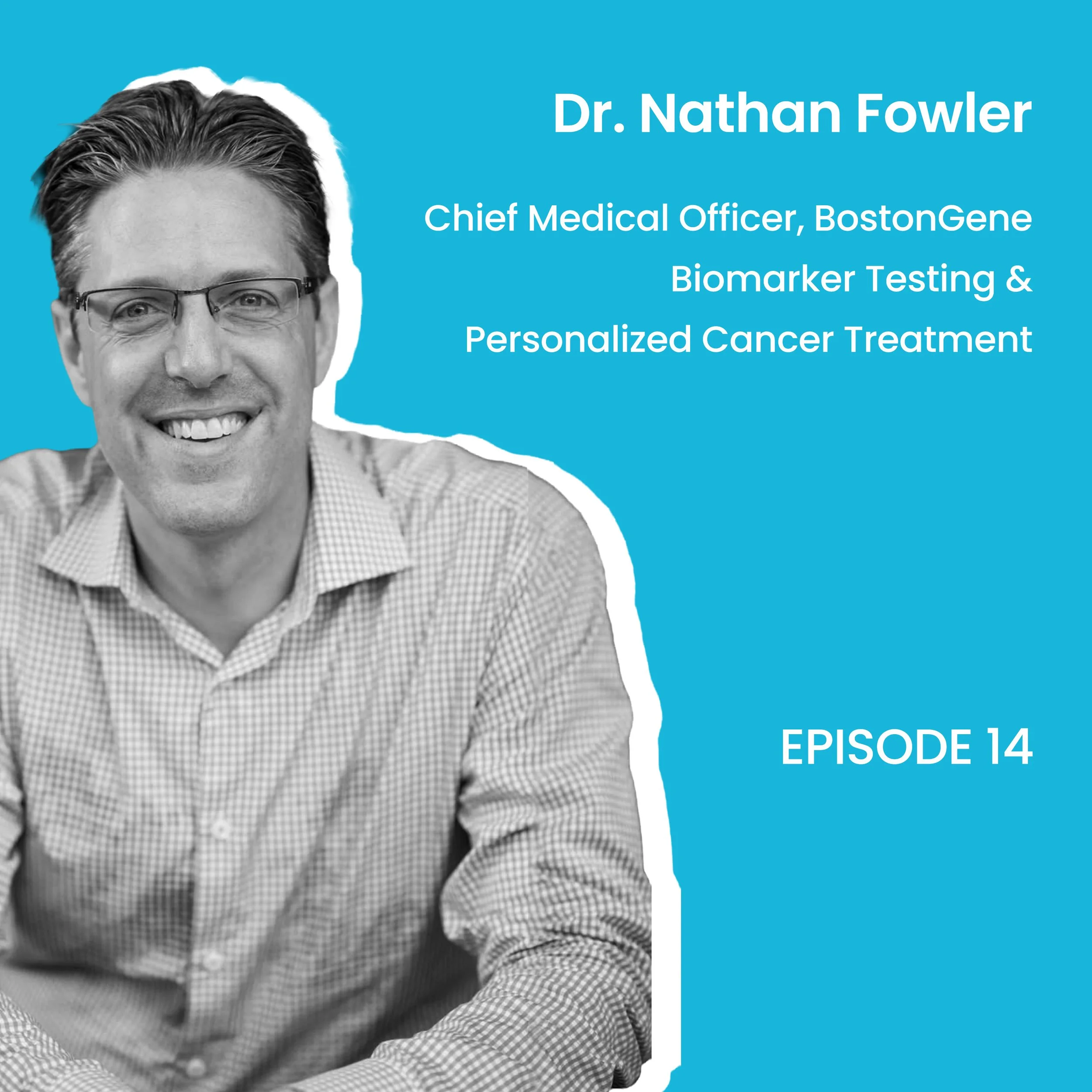
In this conversation, Dr. Nathan Fowler, Chief Medical Officer of BostonGene and former Professor of Medicine at MD Anderson Cancer Center, explains why biomarker testing may be one of the most important tools in modern oncology — and why too many patients still are not getting it.
Together, we explore what terms like precision oncology, tumor sequencing, molecular profiling, liquid biopsy, and ctDNA really mean, and how they can help patients and physicians make more informed treatment decisions. Dr. Fowler explains how biomarker testing can uncover treatment targets, identify clinical trial opportunities, reveal resistance pathways, and sometimes point toward therapies that would otherwise never be considered.
He also shares a remarkable story from his years as an oncologist: a patient with advanced lymphoma whose tumor carried a specific biomarker that matched an experimental therapy — leading to a complete remission that has lasted more than a decade.
We also discuss why Dr. Fowler believes biomarker testing should happen as early as possible, not just after recurrence or metastatic progression, and what patients can do to advocate for themselves if testing is not being offered. The episode covers the difference between germline genetic testing and somatic tumor testing, when repeat testing may be needed, and how blood-based testing may help monitor response and tumor evolution over time.
Finally, Dr. Fowler explains how BostonGene is using AI, RNA and DNA data, immune profiling, and digital tumor models to better understand cancer biology, improve treatment selection, and help move oncology toward a more personalized future.
⏱️ Timestamps:
0:00 — Why your tumor's "address" is no longer enough
1:18 — Precision oncology is NOW science — and why it's radically underused
2:26 — The statistics that should alarm every cancer patient
4:38 — Meet Dr. Nathan Fowler, CMO at Boston Gene
7:33 — A real patient story: T-cell lymphoma and a targeted treatment that worked
10:29 — When to ask for biomarker testing (early diagnosis vs. recurrence)
15:18 — Word-for-word: how to ask your doctor for comprehensive testing
19:15 — Types of tests: comprehensive panels and what Boston Gene does differently
22:02 — Liquid biopsies and the tumor microenvironment explained simply
29:24 — Monitoring treatment response with cell-free DNA (cfDNA/ctDNA)
34:44 — Targeted therapy advantages: fewer side effects than chemo
38:55 — Building your care team and finding clinical trials
43:35 — Important nuances: when biomarkers don't tell the full story
🔗 Resources Mentioned:
• Boston Gene: https://bostongenene.com
• American Cancer Society Patient Navigators: https://www.cancer.org
📚 About Outperform Cancer: Outperform Cancer delivers actionable, anti-cancer strategies backed by peer-reviewed scientific research — so you can make informed decisions with your care team.
🔔 Subscribe for new episodes every week
#CancerResearch #BiomarkerTesting #PrecisionOncology #CancerTreatment #OutperformCancer
💡 If you found this valuable, LIKE, SUBSCRIBE, and SHARE to help others access life-saving information.
Facebook: https://www.facebook.com/outperformcancer/
LinkedIn: https://www.linkedin.com/company/outperform-cancer/
Instagram: https://www.instagram.com/marybethgilliam/
Threads: https://www.threads.com/@marybethgilliam
X: https://x.com/marybethgilliam
The Outperform Cancer podcast provides health information and should not be viewed as medical, nursing, or other professional healthcare advice. Listening to or engaging with the content does not create a doctor/patient relationship. Some guests are research scientists and biochemists and not medical doctors. Any reliance on the information from this podcast or linked materials is solely at your own discretion. This podcast's content is not meant to replace professional medical guidance, diagnosis, or care. If you have a medical issue or question, consult with a healthcare professional without delay.