
Sulforaphane

Pre-clinical research suggests broccoli sprouts kills cancer stem cells.
Evidence shows sulforaphane, found in broccoli sprouts, may affect cancer outcomes by differentially killing cancer cells as well as killing cancer stem cells.
Broccoli sprouts may have a super power. Sulforaphane may seek out and kill cancer stem cells (CSCs). Unlike cancer cells, CSCs are slow growing, can lay dormant for long periods of time, and can hide in microvasculature, leading to recurrence and metastasis. Traditional chemotherapies attack fast-growing cells, a hallmark of the cancer cell, and can’t detect CSCs. New drugs are trying to solve this problem but until then, perhaps the tiny broccoli sprout can help.
May be best used to prevent cancer and cancer recurrence— not during active cancer treatment
One way leading research scientists believe sulforaphane helps inhibit cancer is by upregulation, or increase, in the NRF2 pathway. NRF2 can be tricky because it can act as a “cellular shield” against damage; however, it may also protect cancer cells from cancer drugs. For this reason, it may be best used in cancer prevention.
I personally started using it after I went into a complete remission from my HER2+ metastatic breast cancer. I continue to receive standard drugs of trastuzumab and perjeta, but I have no signs of circulating tumor cells and no signs of active disease. My hope is that the sulforaphane helped kill any remaining cancer stem cells and that it prevents my cells from further mutations that might cause a recurrence. Unfortunately, without more clinical trials, we can’t be sure of its impact. I encourage you to read the research that is available, consider your options, and talk to your doctor.
PRE-CLINICAL AND EARLY CLINICAL RESEARCH SUGGESTS EVERY OTHER DAY SULFORAPHANE
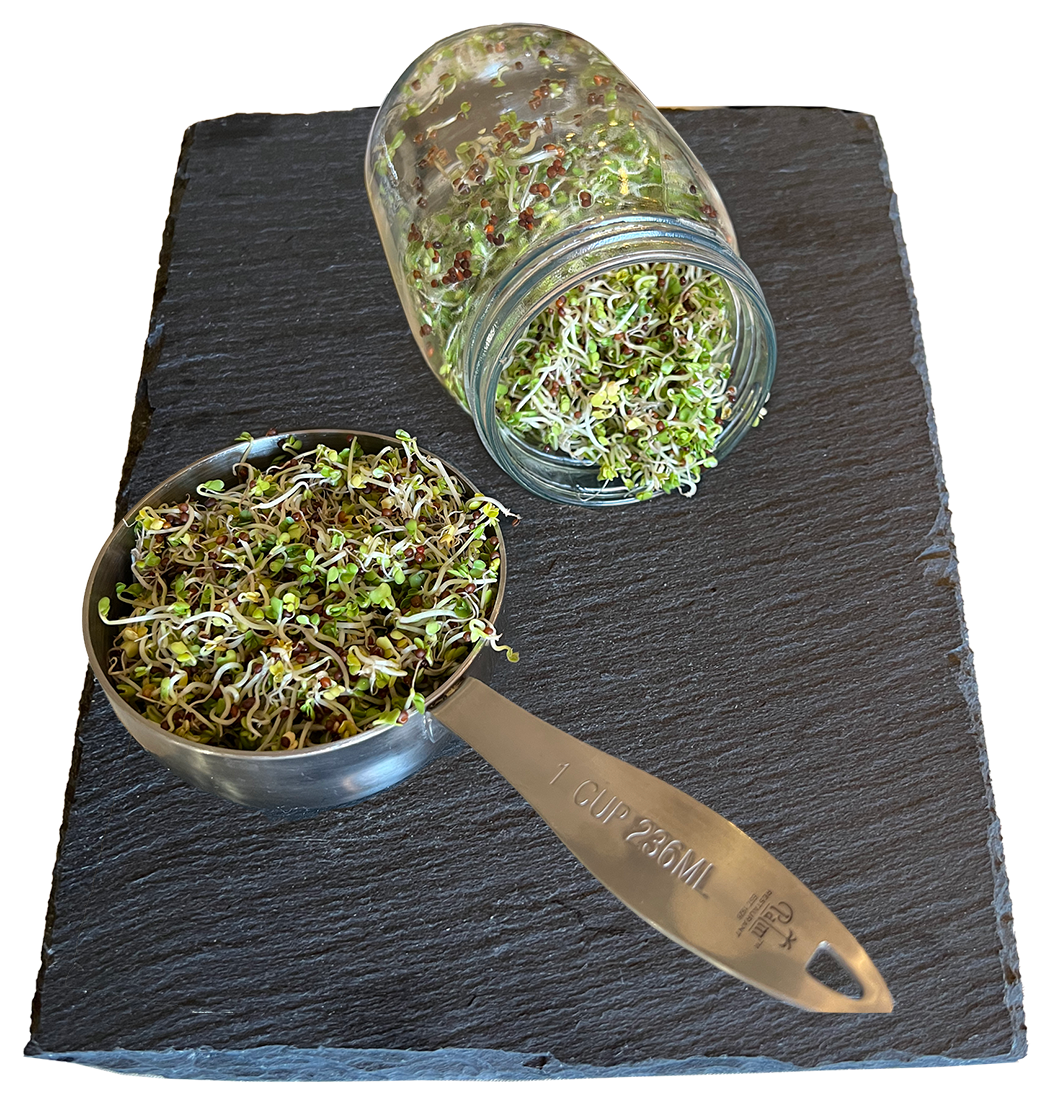
Eat 1 cup of broccoli sprouts every other day.
Sulforaphane will remain in your body for 48 hours, so a cycle of every-other-day maintains a high level in your body.
Broccoli sprouts have as much as 100X more of the active cancer killing compound, sulforaphane, than broccoli. Broccoli is good; sprouts are better.
Don’t like the taste? Research shows that a 50/50 blend with pineapple juice and a splash of lime makes it taste best. Learn more here.
“Based on the overwhelming evidence presented in this in-depth analysis of current research, sulforaphane (SFN) is a promising antineoplastic and chemopreventive phytochemical that can be utilized as a valuable cancer-fighting agent.”
This meta-study from 2021, provides an extensive analysis of multiple research studies on sulforaphane across most types of cancer including Breast, Prostate, Colon, Lung, Pancreas, Gastric, Leukemia. They also discuss current limitations and challenges associated with SFN research. It evaluates a large body of evidence including in vitro, in vivo, and early-stage clinical studies concerning SFN’s efficacy in preventing or reversing a variety of neoplasms and potential as a chemopreventive agent. Like so many other studies, they suggest more research before broccoli-derived products, especially SFN, can be used for human cancer prevention and intervention. Take a look at the study and see what you think.
Sulforaphane and cancer has been studied the most for Breast, Prostate, and Colon cancers but the challenge is the lack of Phase II and Phase III clinical trials. There is a lot of early, pre-clinical, laboratory work, but not a lot of human trials. As of 2021, PubMed lists over 2000 papers written on sulforaphane and cancer.
I’m still waiting for someone to explain to me how we conducted over 2000 cancer research studies and yet still do not have any definitive findings nor any late stage clinical trials. Want to help make sure research drives towards an end-goal? I encourage you to become a patient advocate. They need our input.

Dr. Jed Fahey
Sc.D., M.S.

-
Dr. Fahey is a nutritional biochemist with extensive background in plant physiology, human nutrition, phytochemistry, and nutritional biochemistry. He spent 27 years as a faculty member at the Johns Hopkins School of Medicine where he founded and ran the Cullman Chemoprotection Center.
Another great resource is Dr. Jed Fahey. Follow Dr. Fahey on X (aka Twitter) and read his work.
-
Dr. Fahey’s research addresses the induction by phytochemicals, of cytoprotective, anti-inflammatory, and antioxidant responses in mammalian systems. This work draws on elements of natural product chemistry, enzymology, nutritional epidemiology and clinical research to develop nutritional strategies for chronic disease prevention in humans. Many of these studies deal with the glucosinolates and isothiocyanates that are found primarily in cruciferous vegetables and in a nutritious tropical tree called the drumstick tree or Moringa oleifera.
Dr. Fahey’s group has developed, characterized, and supplied preparations rich in specific phytochemicals for a large number of animal and clinical studies in which they have played an integral collaborative role. Dr. Fahey also taught graduate courses in both the School of Public Health and School of Medicine. Before joining the JHU faculty in 1993, he spent 15 years in the biotechnology industry and held senior management positions in research and process development.
Dr. Fahey maintains adjunct faculty appointments at Johns Hopkins University School of Medicine, George Mason University College of Public Health, and the University of Maine Institute of Medicine. He now spends most of his time working to promote behaviors that enhance healthspan. His ongoing outreach work seeks to translate the science that his group and others have done to prevent chronic diseases, to a lay public audience. He may be available to consult for socially responsible food and supplement companies and foundations.
Research Highlights
-
Reduced tumor formation rate by 70% and inhibited volume by more than 90% in trastuzumab-resistant breast cancer
This research caught my eye for two reasons: 1) it posts some pretty big anti-cancer numbers and 2) it suggests a strategy for someone for whom trastuzumab isn’t working anymore. That’s at the core of my goal — provide people with options who may be running out of them.It was a presentation at the 2013 American Association for Cancer Research and all we have to go on currently is the abstract, but I’m trying to find more information on their work. Stay tuned.
If your cancer has advanced while on trastuzumab, adding broccoli sprouts to your treatment plan may provide an additional benefit and delay the need for next line therapy.
See details below for effective serving size and to learn how to grow your own sprouts.
-
A mean decrease of -115% in ductal carcinoma in situ (DCIS) when provided daily broccoli sprout extract and a mean increase of 400% in DCIS for those not given the extract
This small, masked clinical trial included 30 women and was performed over 14 days. It was conducted at John’s Hopkins University, a leader in sulforaphane research. While this is a small study, the results are aligned with what we would expect given the pre-clinical (non-human) research findings. This is a good first step.That said, while the average responses are exciting, there are large standard deviations in the data — meaning there was a wide-range of individual results in each group tested. Because of the wide range in results, overall, the data was not statistically significant. That said, just because data may not be statistically significant, doesn’t mean that no change happened. We may learn more information by looking at individual cases than trying to make a statistical case based on the group as a whole.
I’ve invited the principle investigator of the research (who is also an oncologist) to do a podcast episode with me and I will be discussing this research with Dr. Jed Fahey in our next interview. I’m looking forward to hearing their perspectives.
-
Sulforaphane effectively suppressed the metastasis of triple negative breast cancer (TNBC) cells, including cell migration and invasion.
Triple-negative breast cancer (TNBC) has the poorest prognosis of all of breast cancer subtypes and we just don’t have good effective therapies to offer patients besides traditional chemo. That’s why this study is very interesting.Chemotherapy does a pretty good job of killing cancer cells, but it doesn’t usually kill cancer stem cells (CSCs). CSCs can evade chemotherapy because they are slow-growing and they can enter a “quiet mode” and hide in microvasculature. They are thought to be responsible for relapse after therapy, so their elimination is critical to a successful anti-cancer strategy.
This study found in vivo evidence (mouse study) that sulforaphane could inhibit malignant cell proliferation and tumor sphere formation of CSCs in TNBC. What does this mean? For TNBC patients who don’t have multiple lines of defense after chemotherapy, this is a potential new anti-cancer strategy that may suppress metastasis.
Sulforaphane
Details
-
Research studies tend to use the dose of about 1 cup of sprouts every other day. The sulforaphane stays in our bodies for about 48 hours.
One clinical trial put the broccoli sprouts in a mango smoothie which is what I tend to do. The mango offsets the bitterness of the sprouts and it improves its bioavailability.
-
The best way to get sulforaphane is to grow and eat broccoli sprouts. It’s not complicated and you get the best, freshest nutrients.
There are sulforaphane supplements, but it is a difficult molecule to manufacture. It can be expensive and products may not deliver the advertised dose. If growing and eating broccoli sprouts isn’t for you, here are some brands that should provide a quality product:
Avmacol by NutraMax
Broccoli Seed Extract by Hormesis
Crucera by Thorne
Oncoplex by Xymogen
-
Most research indicates effectiveness occurs at about 1 cup of sprouts per day or every other day.
I've recently been told by Dr. Jed Fahey, former leader of the Chemoprotection Center at Johns Hopkins, that sulforaphane remains active in your body, for about 48 hours so you can choose to eat them every other day versus daily. That said, Dr. Jed chooses to eat them every day and I take a daily supplement and also eat sprouts every other day.
-
Learn how to grow sprouts from the fabulous Dr. Rhoda Patrick:
Or, download this “how to” PDF produced by Dr. Jed Fahey and Dr. Rhonda Patrick
-
Deep dive with Dr. Rhonda Patrick on Sulforaphane.
Who might benefit?
Cancer Prevention & Prevention of Recurrence
POST-Chemo: Breast, Prostate, Colon, Lung, Pancreas, Gastric, Leukemia cancer patients trying to target cancer stem cells (CSC). Chemotherapy often doesn’t kill CSCs because it targets fast-growing cells and CSCs are slow growing. After chemotherapy treatment, when a patient does not have active cancer, sulforaphane may help eliminate remaining CSC.
Triple Negative Breast Cancer
HER2+ Breast Cancer once Trastuzumab stops working
Early Stage DCIS (ductal carcinoma in situ)
Talk to your doctor. Sulforaphane up-regulates the Nrf2 protein which protects cells from oxidative stress. Because of its protective qualities, some scientists are concerned that it may be harmful to some patients because it could protect cancer cells as well as healthy cells. Importantly, sulforaphane affects more than the Nrf2 pathway, which may explain why many research studies also acknowledge its cancer killing benefits. Personally, I decided to utilize sulforaphane as a strategy after my cancer drugs put me into remission and to try to prevent recurrence. Do your research and talk to your doctor to see if sulforaphane might benefit you.
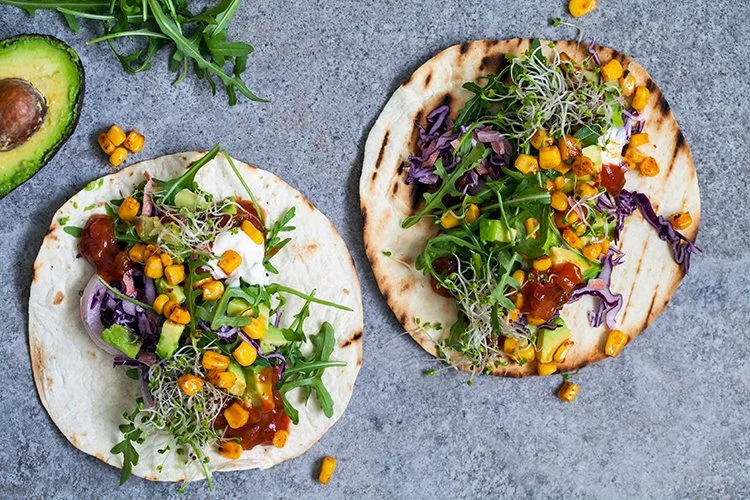


My Story
After my initial metastatic diagnosis meeting, I followed up with my oncologist to find out how I could change my diet to improve my prognosis. I wanted to give myself the best chance to live as long as possible. She suggested a Mediterranean diet. I explained that I already ate a Mediterranean diet and that I was looking for more specific guidance. She said there was some evidence to support that eating cruciferous vegetables might be beneficial. I asked her for more details, "How much? How often? Which ones?" She provided a vague answer about eating them in moderation. I left feeling pretty sure that her approach wasn’t going to change my situation.
I went home and started researching information for myself. It took about two months, but I found it. The truth is, one cruciferous vegetable is special. It's broccoli. Well, actually, it’s broccoli sprouts. Early pre-clinical (lab and mouse models) and early clinical trial evidence shows broccoli sprouts can affect cancer outcomes. Broccoli sprouts have about 100X more of the active cancer killing compound, sulforaphane, than broccoli. I encourage you to look at the research yourself. In the last two years there has been a lot of new published work on the benefits of sulforaphane in combination with standard care treatment.
Do your own research, too.
This website highlights some particularly compelling research studies but I encourage you to do your own research. Often your medical center has a library with wonderful librarians that are happy to help and with full access to all the latest information.