
22 Years Metastatic: How Teri Pollastro Combined Standard Treatment, Cancer Vaccines & Self-Advocacy
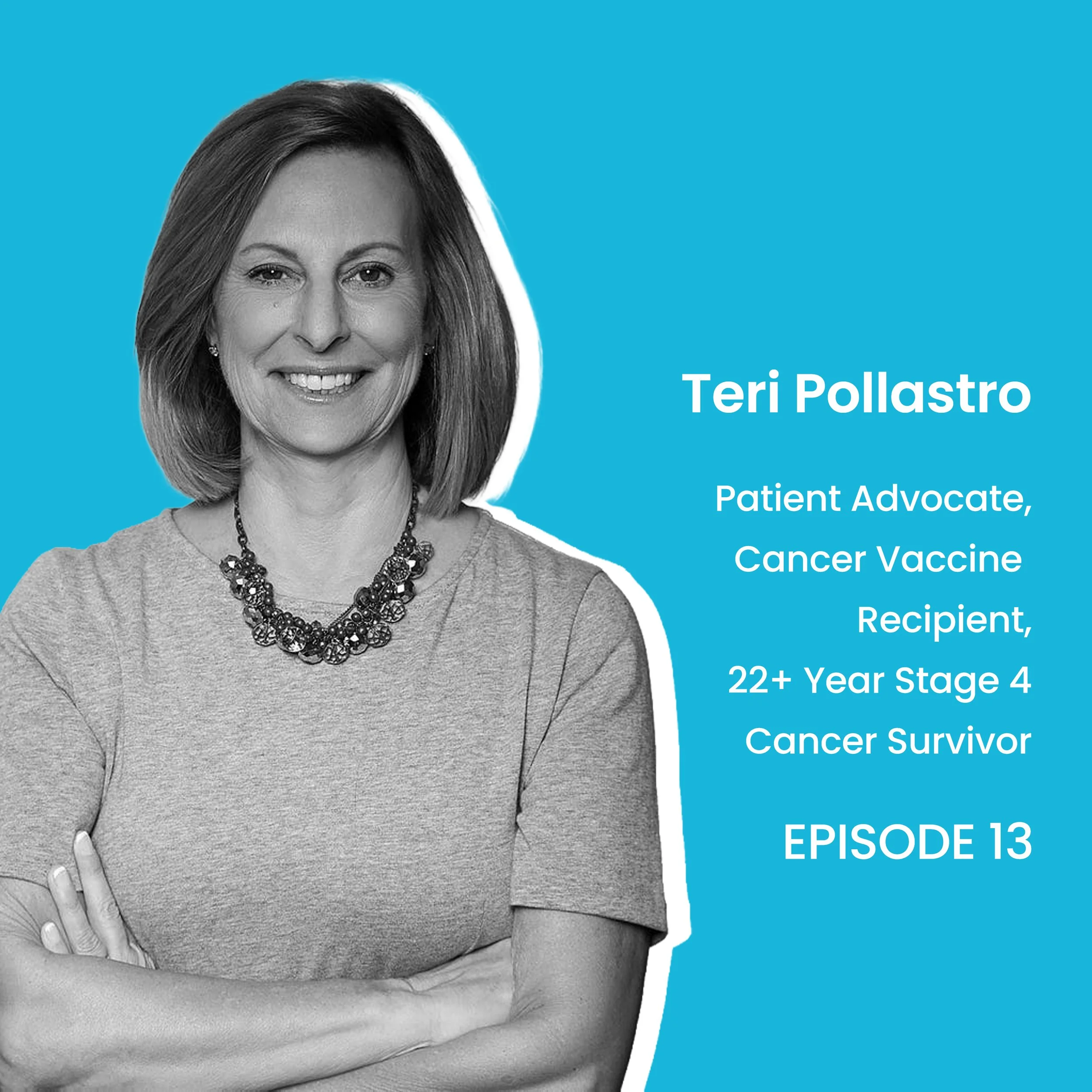
In this deeply moving episode of the Outperform Cancer podcast, I speak with patient advocate and 22+ year metastatic breast cancer survivor Teri Pollastro.
Teri was first diagnosed with DCIS (stage 0) and told she was “cured” after a mastectomy. But four years later, her cancer returned as stage IV metastatic breast cancer to the liver. At the time, the statistics were grim.
Instead of accepting that fate, Teri chose to advocate for herself.
Teri pursued every appropriate standard of care therapy, including:
Weekly chemotherapy (Taxol)
HER2-targeted therapy (trastuzumab/Herceptin)
Ongoing medical oncology supervision
But she didn’t stop there.
She advocated for therapies that were not yet standard of care — treatments that were promising, supported by early research, but not widely adopted at the time.
She made them happen.
Those therapies included:
Stereotactic Body Radiation Therapy (SBRT) — cutting-edge at the time
Participation in a Phase I HER2-targeted cancer vaccine trial
Later receiving vaccine boosters
Intentional lifestyle decisions including exercise, anti-inflammatory nutrition, supplements, and a daily commitment to joy
Today, more than 22 years after her metastatic diagnosis, she remains without evidence of active disease.
Teri’s story is not about rejecting medicine. It is about combining standard of care with informed, evidence-based expansion beyond it.
Advocating for yourself sometimes means choosing therapies that are not yet the norm.
Yes, that carries some risk. And yes — it can carry enormous reward.
In this episode, we discuss:
Why clinical trials should not be a last resort
The importance of cancer vaccines and immunotherapy funding
Postpartum breast cancer risk (MORE INFO PROVIDED BELOW)
How patients can responsibly pursue emerging therapies
The emotional reality of metastatic cancer
Lifestyle strategies that may support immune function
The power of purpose, resilience, and finding one joyful moment every day
Teri’s story is not about magical thinking. It’s about evidence-based risk-taking, informed decision-making, and staying engaged with emerging science.
Most importantly, it’s a reminder that metastatic breast cancer does not always follow the expected script.
And, patients do not need to be passive recipients of care.
POST PARTUM BREAST CANCER DATA
In my discussion with Teri, we discuss the fact that both of us were diagnosed as young moms with very little children. Importantly, being diagnosed within 10 years of having children has been associated with a worse prognosis because of increased metastasis risk.
Below is an excerpt from an important research paper describing the additional risks associated with young age and post partum diagnosis. I encourage you to take a moment to read it and if it describes you, please talk to your doctor about it and demand additional monitoring and screening.
“What causes the poorer prognosis of YWBC has been under examination for many years and the current thinking is often that all young women diagnosed with breast cancer face a poorer prognosis than their older counterparts. The naturally occurring childbearing years directly overlap with early-onset breast cancer for women aged 20-45y. Here we showed that ∼30% of women <45y were diagnosed within 5 years of their most recent childbirth, demonstrating that PPBC is not a rare event. We found that women diagnosed <45y and within 5 years of their most recent childbirth have the poorest OS. We also found that OS was worse for <45y women up to ten years after their last childbirth, consistent with our prior findings of a smaller but significant increased risk for metastasis persisting in women between 5 and ten years postpartum at diagnosis [3]. Among these young mothers, the ‘postpartum effect’ persists when clinical and pathologic factors are adjusted for, including stage and ER status. These data confirm the importance of the time from last childbirth as a highly relevant biomarker for YWBC outcomes, as we have now shown that survival is impacted in addition to the risk for metastasis [2,3]. Indeed, the postpartum cases appear to be the cases driving the poor prognosis of YWBC, as we showed, for the first time, that nulliparous women <45y and parous women <45y diagnosed more than 5 years after the most recent childbirth have similar prognosis in comparison to women diagnosed 45-65y. These data highlight that not all YWBC have poorer outcomes and research focused on PPBC as the highest risk subset is warranted.
Among very young women diagnosed at ≤35y, where age already impacts prognosis [7], we show for the first time that a PPBC diagnosis confers a significantly poorer OS, with a survival probability of only 63% by 15 years post-diagnosis. Nulliparous cases had 2.3 times better OS compared to very young PPBC cases. These data highlight for the first time the importance of parity status among our very young cases as a driving feature for worse survival. We also noted that 15-year survival of Parous>5 ≤ 35y cases (67%), and PPBC 36-44y cases (67%) was worse in comparison to Parous>5 36-44y cases or nulliparous cases. These findings are consistent with our analysis of OS defining PPBC up to 10 years after the last childbirth for the <45y cases, as more women in the younger group are within 10 years, as opposed to beyond ten years postpartum.
Even when the ‘best case scenario’ of an early stage I diagnosis occurs in young women, which we found in only ∼30% of cases, prognosis was significantly worse for PPBC <45y cases. A nulliparous young woman has a 3.3 times better chance of surviving a stage I diagnosis than her young mother counterpart.”
TERI POLLASTRO BIO
Teri Pollastro was diagnosed with HER2+ metastatic breast cancer in 2003, at a time when her children were just 3 and 7 years old. Her treatment has included chemotherapy, Herceptin, stereotactic body radiation therapy (SBRT), and participation in a Phase 1 vaccine clinical trial. She continues to receive Herceptin today.
Teri is deeply involved in cancer advocacy at both the local and national levels. She serves as a patient advocate on numerous Department of Defense (DoD) grants and is one of four advocates in the Translational Breast Cancer Consortium. She works closely with the University of Washington Cancer Vaccine Institute (CVI) and serves on its Patient Advisory Board. Additionally, she is a member of the advisory group for the Fred Hutch MET-X program, which supports patients living with all types of metastatic cancer, and she meets with newly diagnosed metastatic breast cancer patients as needed.
Previously, Teri served as co-chair of the Northwest Metastatic Breast Cancer Conference in Seattle, Washington; co-chair of the MBCA Research Task Force; member at large of the MBCA Executive Group; an advocate on the ASCO Research Task Force Committee; and a patient advocate representing the University of Washington for the TBCRC.
Outside of her advocacy work, Teri enjoys spending time with her family, reading, traveling, hiking, and playing tennis — with enthusiasm if not expertise.
💡 If you found this valuable, LIKE, SUBSCRIBE, and SHARE to help others access life-saving information.
Facebook: https://www.facebook.com/outperformcancer/
LinkedIn: https://www.linkedin.com/company/outperform-cancer/
Instagram: https://www.instagram.com/marybethgilliam/
Threads: https://www.threads.com/@marybethgilliam
Bluesky: https://bsky.app/profile/outperformcancer.bsky.social
X: https://x.com/marybethgilliam
The Outperform Cancer podcast provides health information and should not be viewed as medical, nursing, or other professional healthcare advice. Listening to or engaging with the content does not create a doctor/patient relationship. Some guests are research scientists and biochemists and not medical doctors. Any reliance on the information from this podcast or linked materials is solely at your own discretion. This podcast's content is not meant to replace professional medical guidance, diagnosis, or care. If you have a medical issue or question, consult with a healthcare professional without delay.