
Cancer patients and caregivers are increasingly surrounded by information—research papers, genomic reports, clinical trials, new technologies, and now AI. The challenge is no longer simply finding information. It is figuring out what matters, what is credible, and what is relevant to this particular patient.
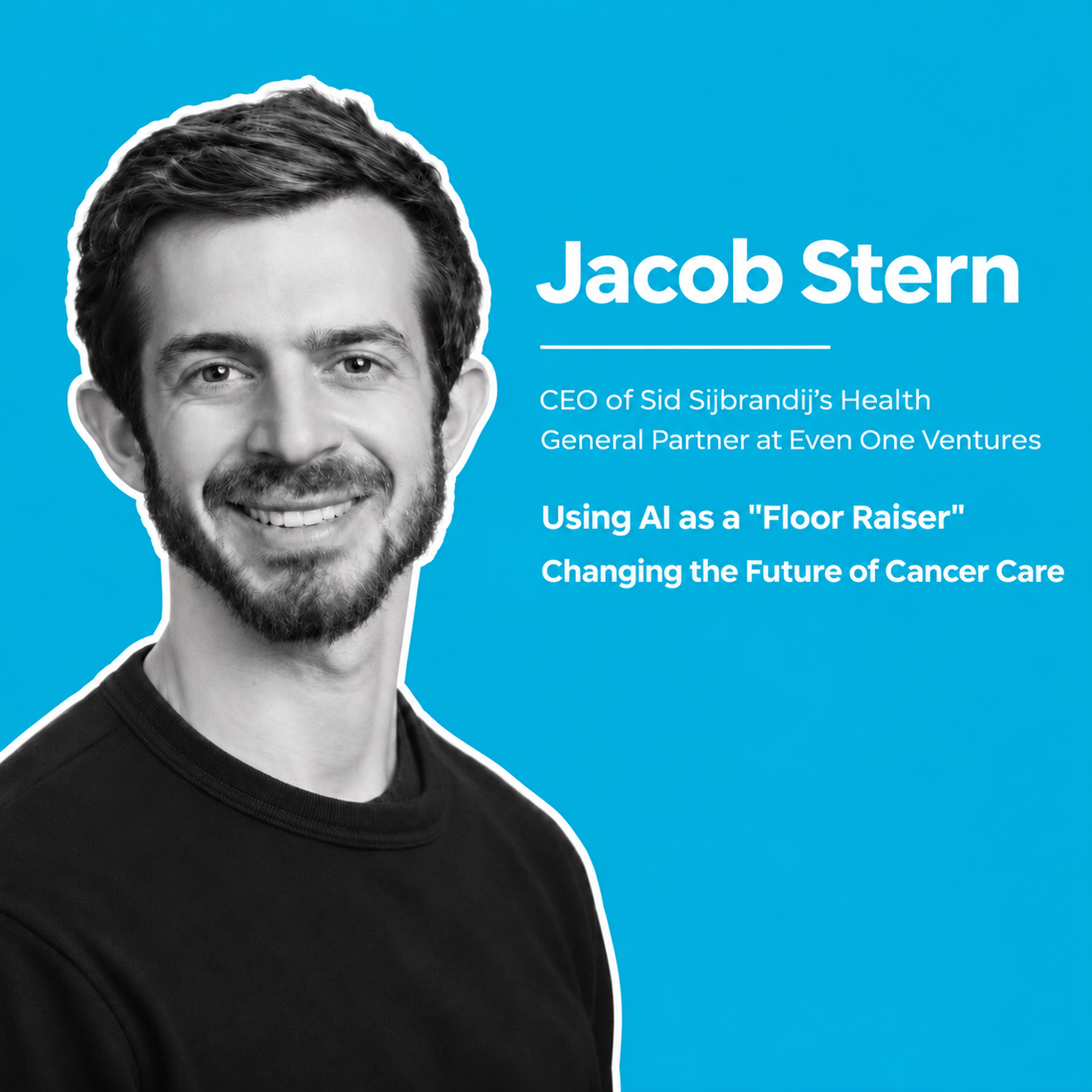
My guest, Jacob Stern, spends his days doing exactly that.
Jacob serves as the quarterback of technology entrepreneur Sid Sijbrandij’s cancer care, helping connect physicians, scientists, molecular data, emerging technologies, and potential treatment strategies around Sid’s experience with osteosarcoma. What makes Jacob’s perspective especially interesting is that he is not an oncologist. His role is to understand enough, organize enough, and ask good enough questions to help experts work more effectively together.
That is also what makes this conversation relevant to the rest of us.
Jacob describes AI as a “floor raiser.” It does not suddenly turn a patient or caregiver into a physician or scientist. But it can dramatically shorten the time it takes to understand an unfamiliar subject, identify the important questions, and become a more capable participant in conversations with medical experts. Jacob has used AI this way while exploring everything from cancer biology to highly technical treatment approaches. His goal is not to have AI make the decision—it is to use AI to help formulate better questions for the people with the expertise to make those decisions.
Of course, AI can also be wrong. One of the most useful parts of our conversation is Jacob’s approach to “red teaming.” Rather than asking AI a question and accepting the first answer, he asks it to challenge its own assumptions, search for contradictory evidence, argue the other side, and repeatedly test whether a hypothesis still holds up. Only then does the information become something worth bringing to an expert for further evaluation.
That approach leads to a larger theme of the episode: information is not the same as evidence. Clinical trials tell us what happened across populations of patients. The individual patient still has to ask: Where might I fit within that evidence? Jacob talks about using the information specific to one person—their tumor biology, sequencing, imaging, functional data, medical history, and priorities—to ask more individualized questions within the boundaries of what the evidence actually supports.
We also talk about the value of thinking ahead. Cancer decisions often become most difficult when progression appears and suddenly time matters. Jacob and Sid try to use periods of stability to consider possible future scenarios and build what they call a “therapeutic ladder.” Jacob describes the benefit as developing a “prepared mind”—doing enough work in advance that, if circumstances change, you are not beginning from zero while simultaneously coping with the emotional shock of progression.
The message throughout this conversation is not that patients should practice medicine themselves. It is almost the opposite.
Jacob’s philosophy is fundamentally collaborative: How do we become informed enough, prepared enough, and organized enough to help our doctors help us?
For patients and caregivers navigating complex cancer care, that may be one of the most valuable uses of AI yet.
Biography: Jacob Stern
Jacob Stern leads operations and investments for the personalized medical team surrounding Sid Sijbrandij. Jacob is pioneering a data-driven, N=1 approach to treating Sid’s high-grade osteosarcoma, overseeing a portfolio of experimental therapeutics and novel diagnostic assays.
Jacob previously led the spatial transcriptomics product line at 10x Genomics. Prior to his work in life sciences, he focused on data integration at Palantir Technologies and strategy at BCG. He holds an MBA and BA from Stanford University.
Episode Chapters
00:00 — Why Patients and Caregivers Can Be Powerful Partners in Cancer Care
Jacob’s background, Sid Sijbrandij’s cancer journey, and why non-physicians can bring valuable skills to coordinating complex care.
09:29 — The Cancer-Care Quarterback: Working With Doctors, Not Against Them
How to organize information, communicate with experts, and make it easier for busy clinicians to help you.
17:32 — AI as a “Floor Raiser”
How AI can rapidly build foundational knowledge and help patients and caregivers become more effective counterparts to experts.
25:20 — Risk, Evidence, and Personalized Cancer Decisions
How Jacob thinks about uncertainty, patient risk tolerance, established evidence, and information specific to one person’s cancer.
35:53 — Red Teaming AI, Yuga Bio, and Patient-First Technology
Using AI to challenge its own conclusions, analyze patient-specific information, and generate hypotheses for experts to evaluate.
49:16 — The Therapeutic Ladder and the “Prepared Mind”
Why thinking ahead before progression may help patients make clearer decisions when cancer forces them to move quickly.
55:45 — Where to Begin: Jacob’s Cancer-Care Quarterback Playbook
Tumor tissue, molecular profiling, functional testing, raw data, AI, and becoming an informed partner to your clinical team.
Resources Discussed
Even One Ventures evenone.ventures
Valius Sciences valiussciences.com
Kernis Health kernis.health
Palitra Bio palitra.bio
Echo Immune echoimmune.com
Relit Bio relit.bio
Yuga Bio yugabio.com
Future of Cancer Care Today Future of Cancer Care Today
About Outperform Cancer
Outperform Cancer translates peer-reviewed cancer research into practical, evidence-based strategies that help patients become informed partners in their care. Through conversations with leading scientists, physicians, and patient advocates, we explore emerging technologies and actionable strategies that may improve outcomes and help patients make more informed decisions.
Medical Disclaimer
The information presented by Outperform Cancer is provided for educational and informational purposes only and is not intended to diagnose, treat, cure, or prevent any disease. The content shared in our podcasts, articles, videos, and website should not be considered medical advice or a substitute for professional medical care.
Cancer treatment decisions are complex and highly individualized. Patients should always discuss treatment options, diagnostic tests, medications, supplements, and lifestyle interventions with their oncology team or other qualified healthcare professionals before making changes to their care.
The discussion of specific therapies, technologies, physicians, companies, research studies, or products does not constitute an endorsement or recommendation by Outperform Cancer. Our goal is to help patients become informed partners in their care by translating peer-reviewed research into understandable, evidence-based information.
Medical knowledge continues to evolve, and new evidence may change how treatments are understood or used over time.