

Biomarker Testing & Personalized Treatment
Biomarker testing can uncover treatment targets, identify clinical trial opportunities, reveal resistance pathways, and sometimes point toward therapies that would otherwise never be considered.
For a long time, cancer treatment has been guided largely by where the cancer appears in the body — breast, lung, colon, blood, and so on. But that’s a bit like trying to repair an engine without opening the hood, or trying to bake a cake without the recipe.
Biomarker-driven care helps us look inside and understand what is actually driving a tumor.
When doctors can match the specific biological drivers of a tumor with a therapy designed to shut those drivers down, the results can sometimes be quite extraordinary.
Have You Had A Biomarker Test?
Biomarker Testing is Recommended
Biomarker testing can help identify targeted therapy or immunotherapy options, avoid ineffective treatments, and help connect patients to clinical trials.
But Only a Lucky Few Receive It
Only 35% of more than 26,000 patients with advanced cancer had evidence of molecular biomarker testing before starting first-line treatment, although utilization increased over time.
Research Suggests It Can Improve Outcomes
“A meta-analysis of 351 phase I studies involving more than 13,000 patients, trials using a personalized biomarker-guided approach had a median response rate of 31%, compared with just 5% in trials that did not use biomarkers to guide treatment.”

NEW PODCAST
The Cancer Test Too Many Patients Still Aren't Getting — And Why It Matters
Biomarker testing is helping turn personalized medicine from an idea into a reality — yet too many cancer patients still aren’t getting it. Dr. Nathan Fowler explains why this testing matters, what it can reveal, and how it can change treatment decisions.



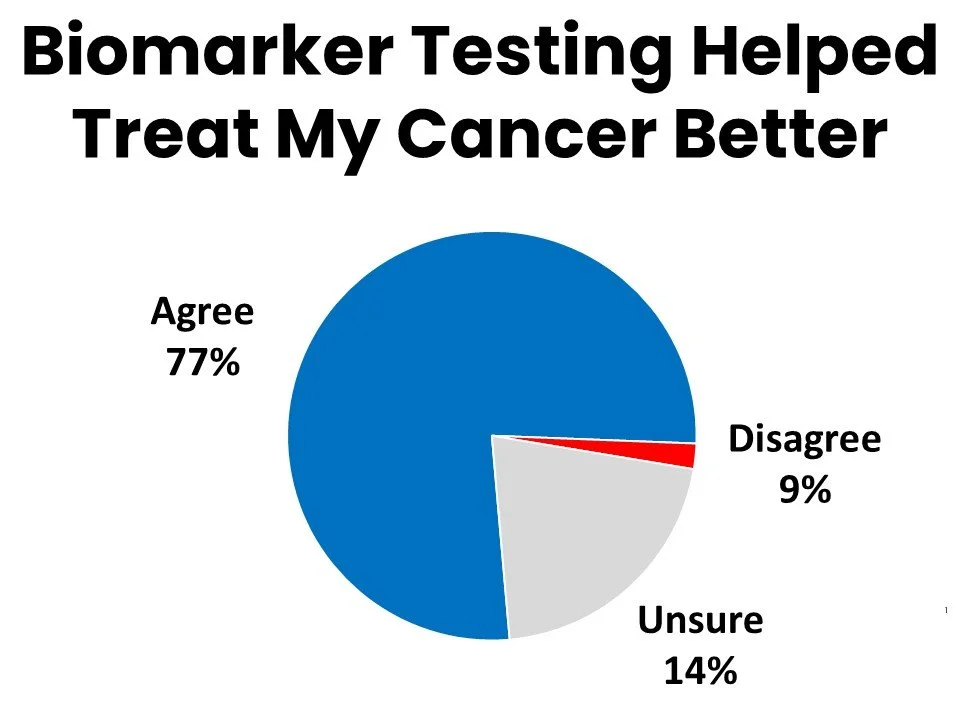
American Cancer Society Cancer Action Network surveyed their Survivor Views panel in September, 2023, finding biomarker testing improved patient care on many levels including outcomes.
“Over three-quarters (77%) of those who have had biomarker testing agree that it gave their providers valuable information that improved their ability to treat the patient’s cancer. Fifty-three percent say they are more likely to recover because of the biomarker testing. Half say they were able to avoid unnecessary treatments or procedures because they had biomarker testing. The results of biomarker testing led to changes in treatment protocol for 23%, and allowed 3% to find and enroll in a clinical trial.”
Q: How might your experience have been different if you hadn’t had biomarker testing?
“I was given 6 months to a year to live. The biomarkers led me to an immunotherapy trial that saved my life.”
“Biomarker testing entered me into a treatment plan that has given me a complete response after failure of two prior plans.”
“We would be less certain about the optimal treatment plan, based on clinical knowledge and standards in place today.”