
The Future of Cancer Radiation Treatment with Dr. Henry Park
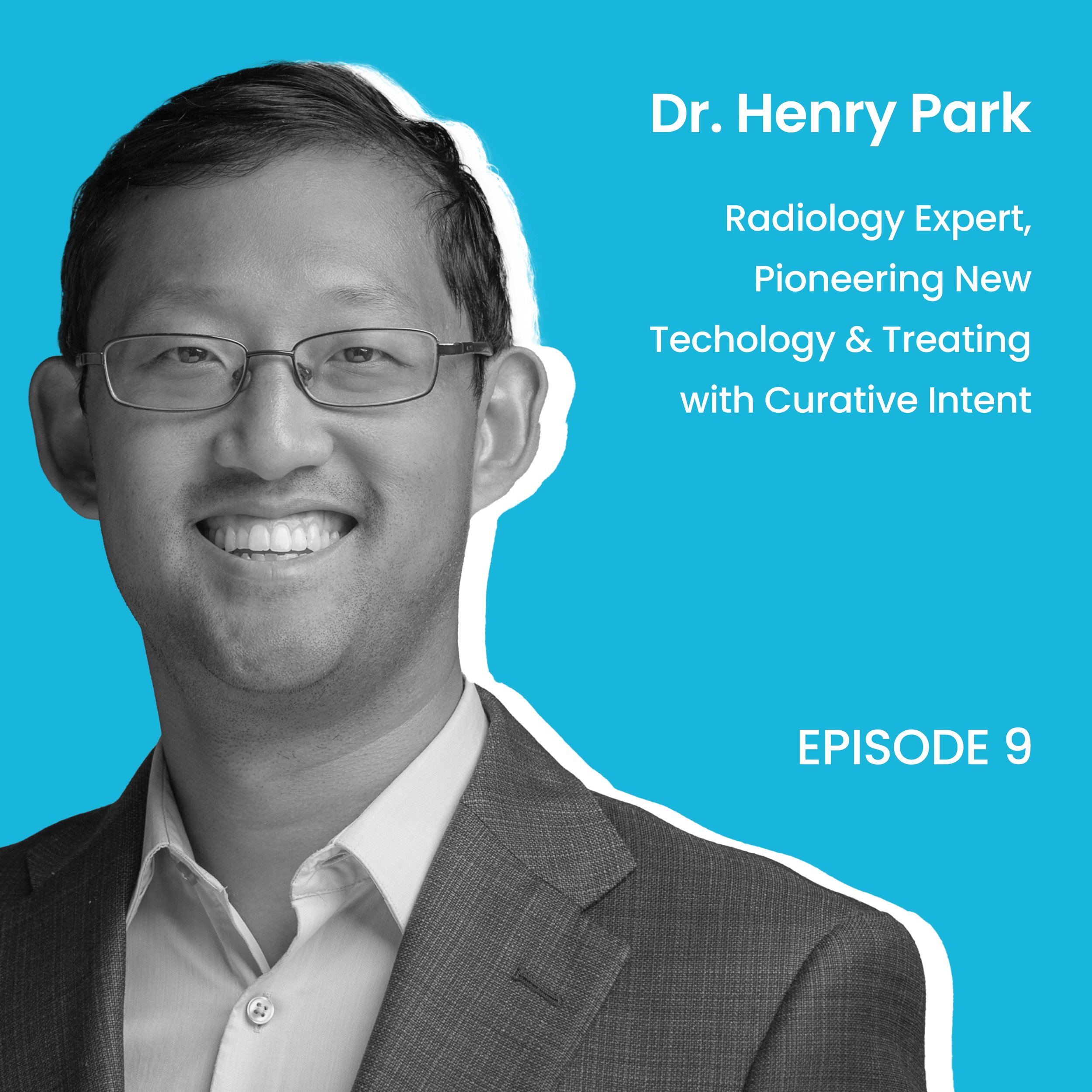
Can radiation actually cure cancer? In this powerful episode of the Outperform Cancer podcast, Dr. Henry Park—Vice Chair for Clinical Research, Therapeutic Radiology, at Yale School of Medicine and Radiation Oncologist at Smilow Cancer Center—challenges outdated assumptions about radiation therapy. He explains how, in the right cases, radiation isn't just used to shrink tumors or relieve symptoms—it can eliminate cancer completely.
Dr. Park breaks down how modern radiation techniques allow for precise, high-dose treatment with fewer side effects, and why patients with metastatic cancer should still ask if radiation can be used with curative intent. He also reveals which gender responds better to radiation therapy—and why that insight could change how we personalize treatment.
Plus, you'll discover a breakthrough in radiation therapy: RefleXion Scintix, a cutting-edge technology that enables doctors to target multiple tumors in real time—even while the patient is breathing. This real-time tracking reduces radiation exposure to healthy lung tissue and could make it possible to treat late-stage cancers more precisely, aggressively, and safely than ever before.
If you or a loved one is facing cancer, this episode is a must-listen. You'll walk away informed, empowered, and maybe even surprised by what's possible with radiation therapy today.
💡 If you found this valuable, LIKE, SUBSCRIBE, and SHARE to help others access life-saving information.
-
0:00:00 Introduction and Dr. Park’s background
0:07:09 Why radiation therapy is often misunderstood
0:14:18 What does 'curative intent' mean in radiation?
0:21:27 How radiation therapy actually works in the body
0:28:36 RefleXion Scintix and real-time tumor targeting
0:35:45 Radiation in stage IV cancer and multiple tumors
0:42:54 How doctors decide how much radiation to give
0:50:03 Which gender responds better to radiation (and why)
0:57:12 The biggest radiation therapy myths—debunked
1:04:21 Final thoughts and key takeaways
-
Radiotherapy Outcome Differences by Gender for Cancer
Citation: Moran MS, Schnitt SJ, Giuliano AE, Harris JR. Gender-dependent radiotherapy: The next step in personalised medicine? Lancet Oncology. 2020;21(3):e112-e117.PubMed
Summary: This review examines the emerging evidence of gender-based differences in radiotherapy outcomes, suggesting that personalized treatment strategies considering gender may enhance efficacy and reduce toxicity.
RefleXion Scintix Radiotherapy Technology for Lung Cancer Patients
Citation: Bowden G, Kneebone A, Booth J, et al. First-Year Experience of Stereotactic Body Radiation Therapy Treatments on the RefleXion X1 System. Frontiers in Oncology. 2023;13:10801639.PMC
Summary: This study provides insights into the initial clinical experience using the RefleXion X1 system for stereotactic body radiation therapy (SBRT), highlighting its performance and potential benefits for lung cancer treatment.
SABR Technology for Oligometastatic Cancer Patients
Citation: Palma DA, Olson R, Harrow S, et al. Stereotactic ablative radiotherapy for the comprehensive treatment of oligometastatic cancers (SABR-COMET): a randomized, phase 2, open-label trial. The Lancet. 2019;393(10185):2051-2058.PMC+7PMC+7PubMed+7
Summary: This phase II trial assesses the impact of stereotactic ablative radiotherapy (SABR) on survival and oncological outcomes in patients with controlled primary tumors and 1-5 oligometastatic lesions, demonstrating a potential survival benefit.PubMed+2PubMed+2PMC+2
A Comparison of IMRT and SBRT
Citation: Viani GA, Arruda CV, Hamamura AC, Faustino AC, De Fendi LI. Intensity-modulated radiotherapy for hepatocellular carcinoma: systematic review and meta-analysis of 1681 patients. European Journal of Clinical Investigation. 2018;48(6):e12901.
Summary: This systematic review and meta-analysis evaluate the efficacy and safety of intensity-modulated radiotherapy (IMRT) for hepatocellular carcinoma, comparing outcomes with other radiotherapy modalities, including stereotactic body radiotherapy (SBRT).PMC
SBRT for Brain Metastasis
Citation: Miccio JA, Sheehan JP, Kersh CR, et al. Multi-institutional retrospective review of stereotactic radiosurgery for brain metastasis in patients with small cell lung cancer without prior brain-directed radiotherapy. Journal of Radiosurgery and SBRT. 2020;7(1):19-27.PubMed+1PMC+1
Summary: This multi-institutional retrospective study reviews the outcomes of stereotactic radiosurgery for brain metastases in small cell lung cancer patients who had not received prior brain-directed radiotherapy, providing valuable insights into treatment efficacy.
-
For a complete list of clinical trials visit www.clinicaltrials.gov .
Study Title:Proton Beam Radiation Therapy vs. Intensity-Modulated Radiation Therapy in Treating Patients With Esophageal Cancer
ClinicalTrials.gov Identifier: NCT03801876
Summary: This phase II/III trial compares proton beam radiation therapy to intensity-modulated radiation therapy to determine which is more effective in treating patients with esophageal cancer.
Link: https://clinicaltrials.gov/ct2/show/NCT03801876
Study Title:Stereotactic Body Radiation Therapy in Treating Patients With High-Risk Prostate Cancer
ClinicalTrials.gov Identifier: NCT03367702
Summary: This phase II trial studies how well stereotactic body radiation therapy works in treating patients with high-risk prostate cancer.
Link: https://clinicaltrials.gov/ct2/show/NCT03367702
Study Title:Adaptive Radiation Therapy Using PET/MRI in Patients With Head and Neck Cancer
ClinicalTrials.gov Identifier: NCT03224000
Summary: This phase I trial studies the side effects and feasibility of adaptive radiation therapy using PET/MRI scans in patients with head and neck cancer.Clinical Trials
Link: https://clinicaltrials.gov/ct2/show/NCT03224000
Study Title:A Study of Stereotactic Ablative Radiotherapy for Oligometastatic Breast Cancer
ClinicalTrials.gov Identifier: NCT02364557Wikipedia
Summary: This phase II trial studies how well stereotactic ablative radiotherapy works in treating patients with oligometastatic breast cancer.
Link: https://clinicaltrials.gov/ct2/show/NCT02364557
Study Title:Comparing Photon Therapy to Proton Therapy to Treat Patients With Lung Cancer
ClinicalTrials.gov Identifier: NCT01993810
Summary: This phase III trial compares photon therapy to proton therapy to see how well they work in treating patients with lung cancer.
Link: https://clinicaltrials.gov/ct2/show/NCT01993810
The Outperform Cancer podcast provides health information and should not be viewed as medical, nursing, or other professional healthcare advice. Listening to or engaging with the content does not create a doctor/patient relationship. Some guests are research scientists and biochemists and not medical doctors. Any reliance on the information from this podcast or linked materials is solely at your own discretion. This podcast's content is not meant to replace professional medical guidance, diagnosis, or care. If you have a medical issue or question, consult with a healthcare professional without delay.